The Iowa Guide
GLP-1 weight loss in Iowa: everything you need to know
A practical guide for Iowans who want to understand how telehealth GLP-1 care works, who qualifies, what to expect, and how to get started.
Telehealth in Iowa: where things stand
Iowa permits telehealth prescribing under Iowa Code Chapter 148 and rules from the Iowa Board of Medicine. A licensed Iowa physician may establish a patient relationship and issue a prescription through a telehealth encounter provided the visit meets the same standard of care as an in-person visit. Iowa has been relatively progressive on telemedicine policy, making many pandemic-era flexibilities permanent under Senate File 129 and subsequent legislation. The Iowa Board of Medicine has issued clear guidance permitting physician-patient relationships established entirely through telehealth for non-controlled medications.
Iowa is a predominantly rural state where specialist access is concentrated in Des Moines, Cedar Rapids, Iowa City (home of University of Iowa Hospitals), and Sioux City. Residents of the hundreds of small farming communities across the state — places like Carroll, Spencer, Oskaloosa, Ottumwa — often face hour-plus drives to see a specialist. A telehealth evaluation with an Iowa-licensed physician through Puri removes that barrier and makes the same clinical review available from any rural Iowa zip code.
Iowans have full telehealth access for GLP-1 care under Iowa law. The question is not whether you can get treatment online — it is whether the platform you choose offers real care or just a prescription delivery service.
Who qualifies for GLP-1 weight loss in Iowa
Qualification for GLP-1 medication is based on clinical criteria, not geography. A licensed physician will evaluate:
- Your BMI. Most providers follow FDA prescribing guidelines for brand-name products, which typically require a BMI of 30 or greater, or 27 or greater with a weight-related health condition (such as hypertension, type 2 diabetes, dyslipidemia, or obstructive sleep apnea).
- Your medical history. Certain conditions contraindicate GLP-1 use, including personal or family history of medullary thyroid carcinoma or MEN2, history of pancreatitis, severe gastroparesis, active cancer, and pregnancy or breastfeeding.
- Your current medications. Some medications interact significantly with GLP-1 receptor agonists. A full medication review is part of every intake.
- Your goals and expectations. A provider wants to understand what you are hoping to achieve and whether GLP-1 therapy fits the rest of your life.
If you meet the clinical criteria and have no contraindications, a Puri-affiliated physician licensed in Iowa may determine that compounded semaglutide or tirzepatide is appropriate. If not, they will explain why and you will not be charged for medication you did not receive.
What to expect from GLP-1 therapy
GLP-1 receptor agonists work by mimicking a hormone the body naturally produces to regulate appetite, slow gastric emptying, and improve insulin sensitivity. The result for most patients is reduced hunger, smaller portion sizes, and gradual weight loss.
Clinical trial data on the brand-name FDA-approved versions (Wegovy, Zepbound) show average weight loss of 12-18% of body weight over 12 months when combined with lifestyle changes. Compounded semaglutide and tirzepatide have not been evaluated for equivalence to brand products, so individual results may vary.
Most patients experience a slow, steady reduction in appetite and weight over the first three months. Side effects, when they occur, are usually mild gastrointestinal symptoms (nausea, constipation, decreased appetite) that improve as the body adjusts. Your provider will start you at a low dose and increase gradually to minimize side effects.
Compounded vs brand-name: what's the difference?
Brand-name semaglutide (Wegovy, Ozempic) and brand-name tirzepatide (Zepbound, Mounjaro) are FDA-approved finished drug products manufactured by Novo Nordisk and Eli Lilly. They have undergone clinical trials, FDA review, and ongoing post-market safety monitoring. They are sold at standard pharmacies and may be partially covered by insurance.
Compounded semaglutide and compounded tirzepatide are custom-prepared by state-licensed compounding pharmacies under a valid prescription. Compounded medications are NOT FDA-approved, have not been evaluated by the FDA for safety or effectiveness, and have not been reviewed for equivalence to brand-name products. The FDA permits compounding of these medications under specific conditions, but a compounded medication is not the same as a brand-name medication and should not be assumed to be identical.
The honest version: compounded medications can provide an accessible path for patients who cannot get brand-name products. They are also not the same thing as the brand-name product, and a licensed physician should weigh the tradeoffs with you. Cheap is not the same as safe; expensive is not the same as effective. Have the conversation.
Who should not take GLP-1 medication
GLP-1 medication is not appropriate for everyone. A licensed physician will decline to prescribe if any of the following apply:
- Personal or family history of medullary thyroid carcinoma (MTC) or Multiple Endocrine Neoplasia syndrome type 2 (MEN2).
- Personal history of pancreatitis.
- Pregnancy, breastfeeding, or actively trying to conceive.
- Active or recent cancer.
- Severe gastroparesis or other severe gastrointestinal motility disorder.
- Active eating disorder.
- Severe kidney or liver disease.
- BMI that does not meet clinical criteria for weight management medication.
- Residence outside Iowa (we only prescribe in states where our providers are licensed).
How to get started in Iowa
The process is straightforward:
- 1Complete the 5-minute online intake at our assessment page.
- 2Provide your Iowa address and verify your residency.
- 3Wait for physician review (typically within 24 hours).
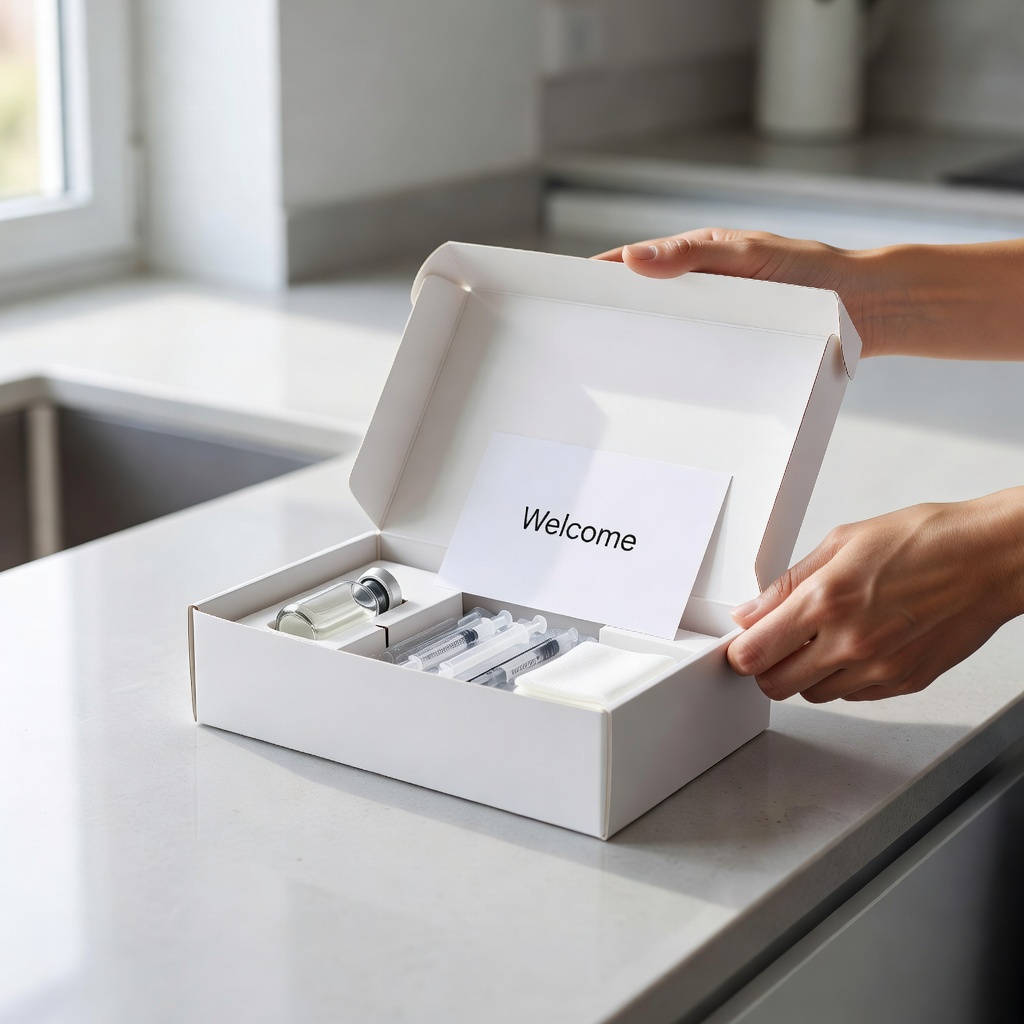
- 4If approved, receive your medication at your Iowa address.
- 5Use provider messaging for ongoing questions and dose adjustments.
Ready to begin? Start your assessment. A licensed physician eligible to practice in Iowa will review your information and be in touch.